Can a Mural Be Painted Over? Caring for a Painted Wall
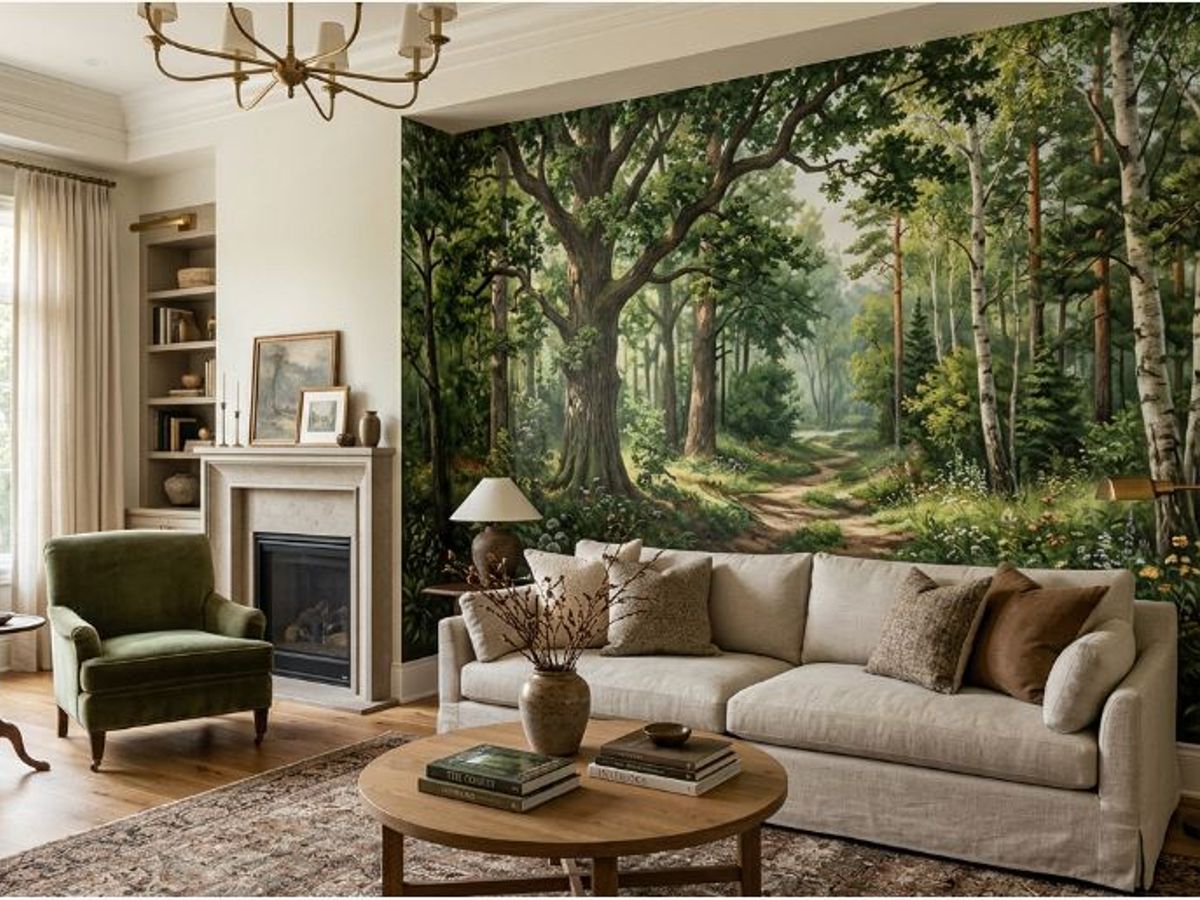
The question about painting over usually comes at the end of a conversation, and usually half-swallowed. People feel awkward asking a painter how to get rid of her work. I think it's one of the more sensible things you can ask before ordering. A wall has to live alongside the flat, flats change, children grow out of unicorns.
So let me answer straight away: yes, a mural can be painted over, and it's no harder than covering an ordinary coloured wall. The more interesting part is the one nobody asks about directly. How to keep it looking the way it did on handover day for the fifteen years before you get bored of it.
What's actually on your wall
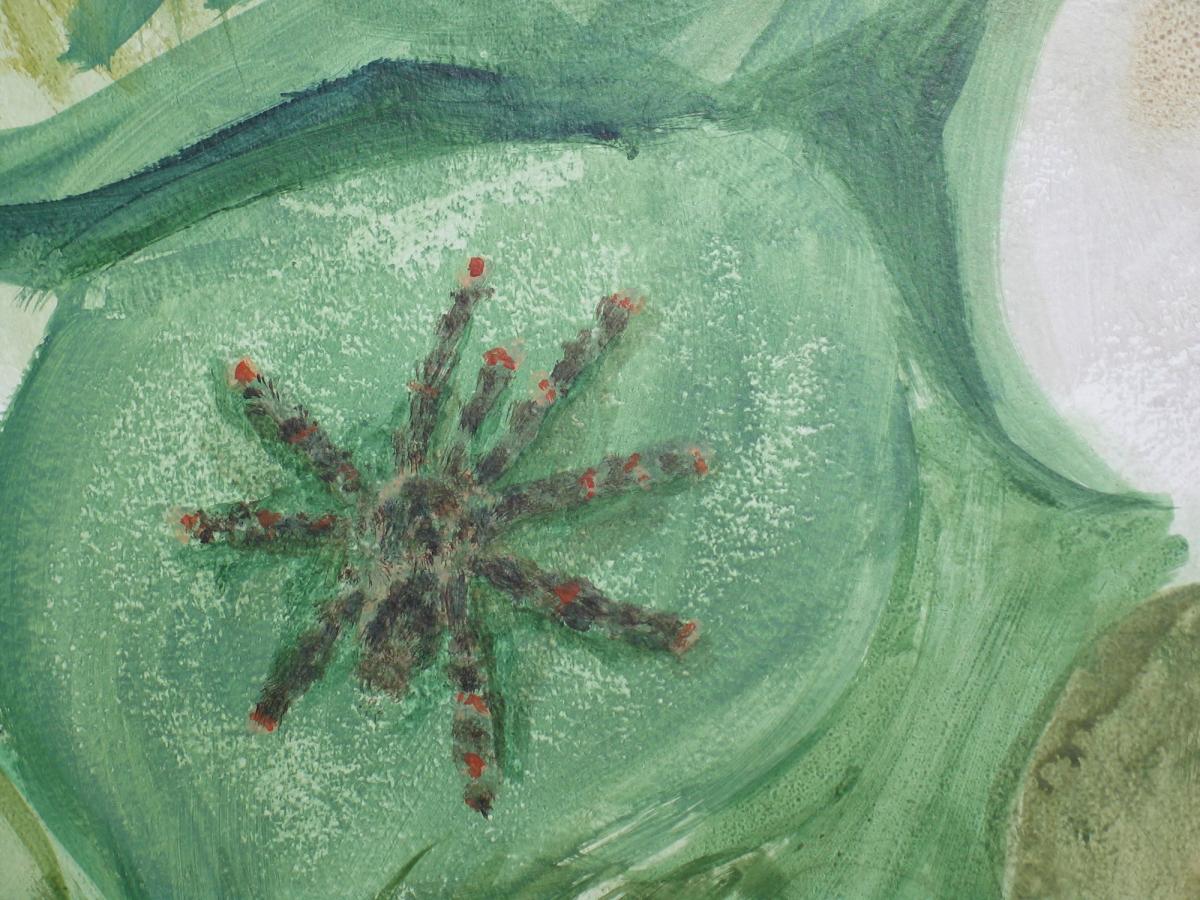
I paint with acrylics on a prepared and primed substrate. Once dry, acrylic forms a flexible film that grips the wall better than ordinary emulsion and doesn't crumble when the plaster moves slightly. It's the same family of paint used in easel painting, so the pigments are lightfast and won't yellow.
The finish is matte by default. A matte wall simply looks better indoors, it doesn't bounce light around and it doesn't emphasise unevenness in the plaster. The price you pay is that matte picks up dirt more easily than satin and is harder to clean off, which matters when you're choosing where the mural goes.
Dust, fingerprints, the mark a chair leaves
Ninety percent of what lands on a wall is dust. Every few months run a dry microfibre cloth or a soft dusting brush over the surface, the same one you use on furniture. Top to bottom, no pressure. That's genuinely all it takes.
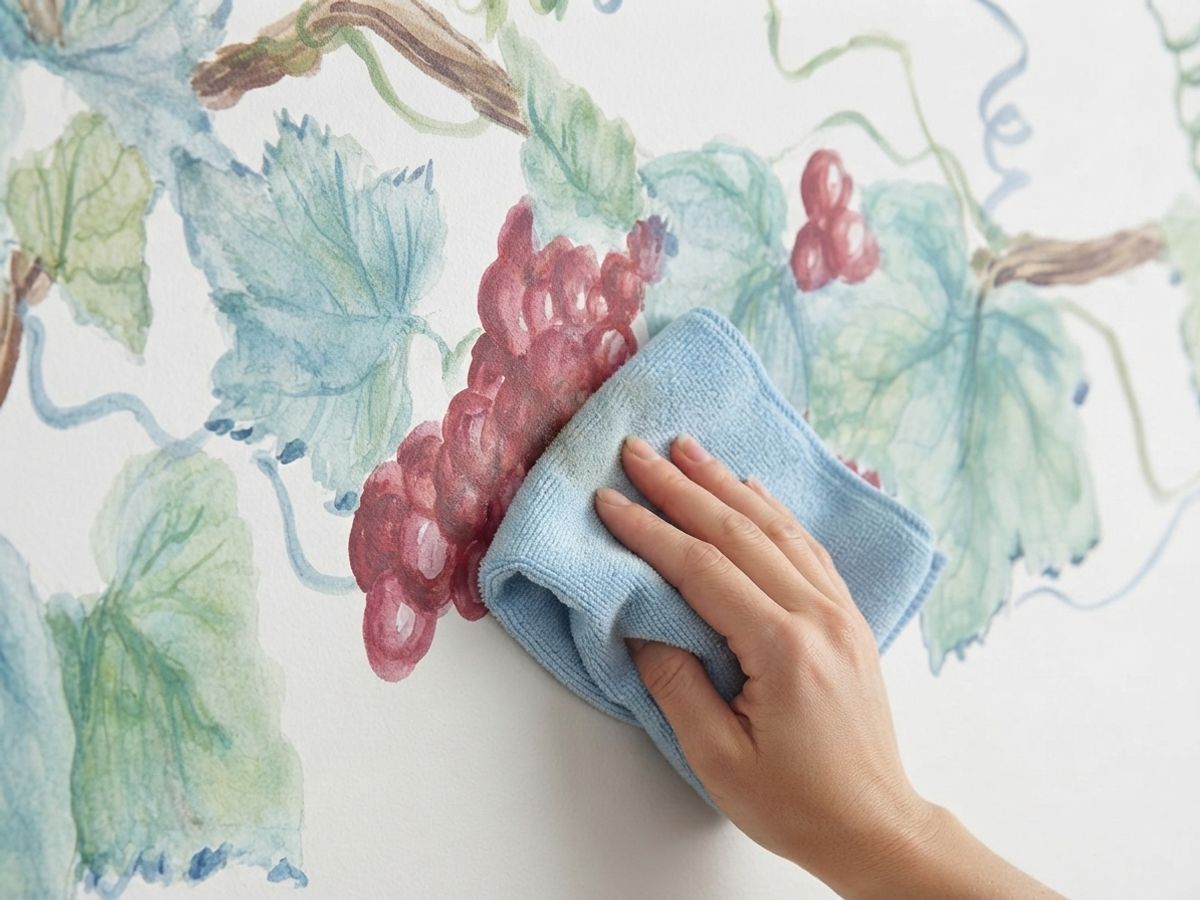
A fingerprint, a chair-back mark, a smudge from a bag will come off with a slightly damp cloth. Damp means wrung out almost dry, not wet. Work on the spot, then dry it immediately with the clean side so no ring forms at the edge. For a larger area it's better to wash the whole section out to the nearest edge of the composition than to leave a lighter patch in the middle.
Things never to use: abrasive sponges, cream cleaners, scouring powder, melamine magic erasers. Melamine is very fine sandpaper in disguise and it lifts a layer of paint along with the stain. Anything based on alcohol, acetone or bleach is out too, since it dissolves the acrylic binder and smears the pigment. I once saw a wall cleaned with glass cleaner where a pale, cloth-shaped rectangle stayed behind.
When water isn't enough
Kitchen grease comes off with water and a drop of washing-up liquid, whipped into foam and applied as foam rather than solution. Wax crayon and felt-tip are a different matter. A washable marker will lift with a damp cloth if you get to it within a day. A permanent marker on matte, unsealed paint stays for good, and retouching is the only way out.
Retouching isn't a disaster. I leave clients small jars of the colours I used, labelled with the numbers from the technical drawing. For small damage a fine brush and some patience will do it. For anything bigger I come over and fix it, usually in a single morning. Rates for those visits sit alongside everything else in my mural pricing guide.
Varnish: needed or not
A clear acrylic varnish seals the paint and turns a matte surface into something you can wash with water and detergent without worrying. You're buying washability and paying for it with a change in appearance. Even a varnish labelled matte closes the colours slightly, deepens them a little, and takes away the chalky, velvety quality people order a mural for in the first place.
My rule is straightforward. In a living room, bedroom or hallway above furniture height I don't varnish. In a kitchen, a bathroom, a small child's room and anywhere the wall will be touched, I always do. We settle it together at the quoting stage, because it affects both the cost and the timeline.
Kitchen, bathroom, child's room
In a kitchen the problem isn't grease on its own but steam carrying grease with it. A mural above a worktop or behind the hob needs satin varnish and at least a metre of clearance from the burners. Above a dining table the risk drops sharply and one coat of matte varnish is usually plenty.
In a bathroom, ventilation decides everything. A working extractor and a window mean acrylic with varnish will hold up for years. A windowless bathroom with a bath and daily showers is where I more often talk clients out of a mural and suggest mineral plaster or tadelakt instead, because those work with moisture rather than resisting it. I went into this in more detail in my overview of six decorative techniques.
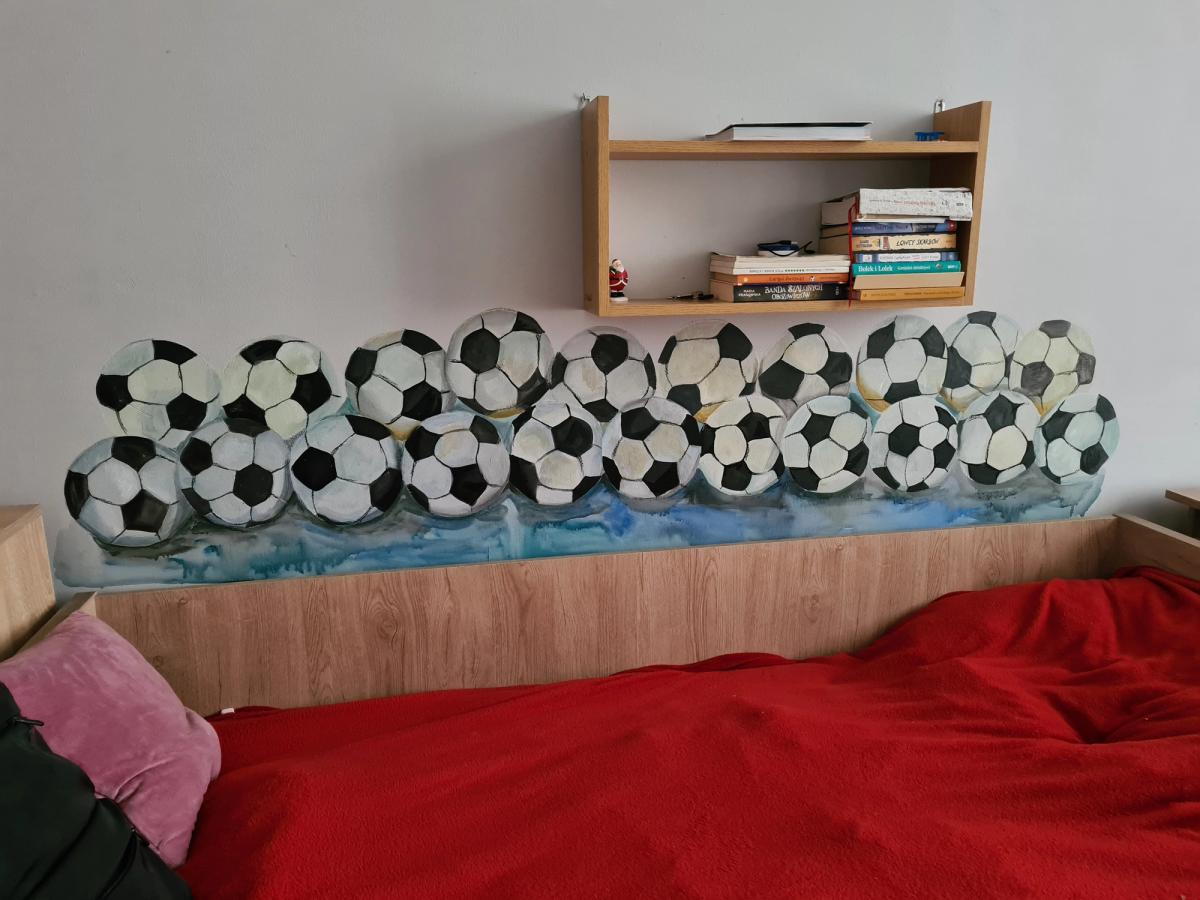
A child's room gets varnished every time, no debate, up to about a metre sixty. Above that a child won't reach, below it they'll reach with whatever's to hand. I tell parents plainly that varnish is no guarantee against a permanent marker, it just buys you time to react.
When the wall takes a hit
Water damage, cracked plaster after building work next door, a hole from a shelf bracket. It happens, and it can usually be repaired without redoing the whole thing. What matters is not patching it yourself with ordinary white paint, because shop-bought white almost never matches the background, and a painted-over square shows up more than the crack did.
Take a photo and send it over. For small things I'll talk you through doing it yourself with the sample jar you already have. For anything serious we book a date, the same way as for the original job, along the lines described in my piece on the ordering process.
How to paint over it when the time comes
Start by wiping the wall dry and checking for any raised paint. If the mural was varnished, sand the surface with fine paper, 220 or 240 grit, without enthusiasm, since all you want is to knock back the sheen so new paint has something to grip. Vacuum the dust off.
Then a blocking primer, ideally one rated for difficult substrates. People skip this step and end up rolling four coats instead of two. Dark pigments, especially reds, phthalo blues and blacks, will ghost through ordinary white paint even after a third coat. One coat of decent primer settles it.
Finish with two coats of your chosen paint, by roller, respecting the drying times on the tin. The whole thing fits into one afternoon plus drying. If you're planning decorative plaster on that wall after the mural, the situation is different and my piece on preparing a wall for decorative plaster is worth a look, because the substrate needs more serious treatment there.
How long it actually lasts
An interior mural on a properly prepared wall, without harsh direct sun on it all day, will comfortably hold fifteen years and more. Good acrylics have lightfastness comparable to artists' paints, so the colour won't fade in any way you'd notice by eye. The limiting factor is the state of the plaster underneath, not the paint.
In practice murals get removed because taste changes or people move, far more often than because they wore out. Which is fine by me. If a wall gave someone pleasure for ten years and then disappeared under two coats of roller, it did its job.
Joanna Kruza — murals and decorative wall techniques. Fine Arts Academy graduate. Working in Kraków and Warsaw.