A Mural in a Child's Room — What Works at Every Age (0–10)
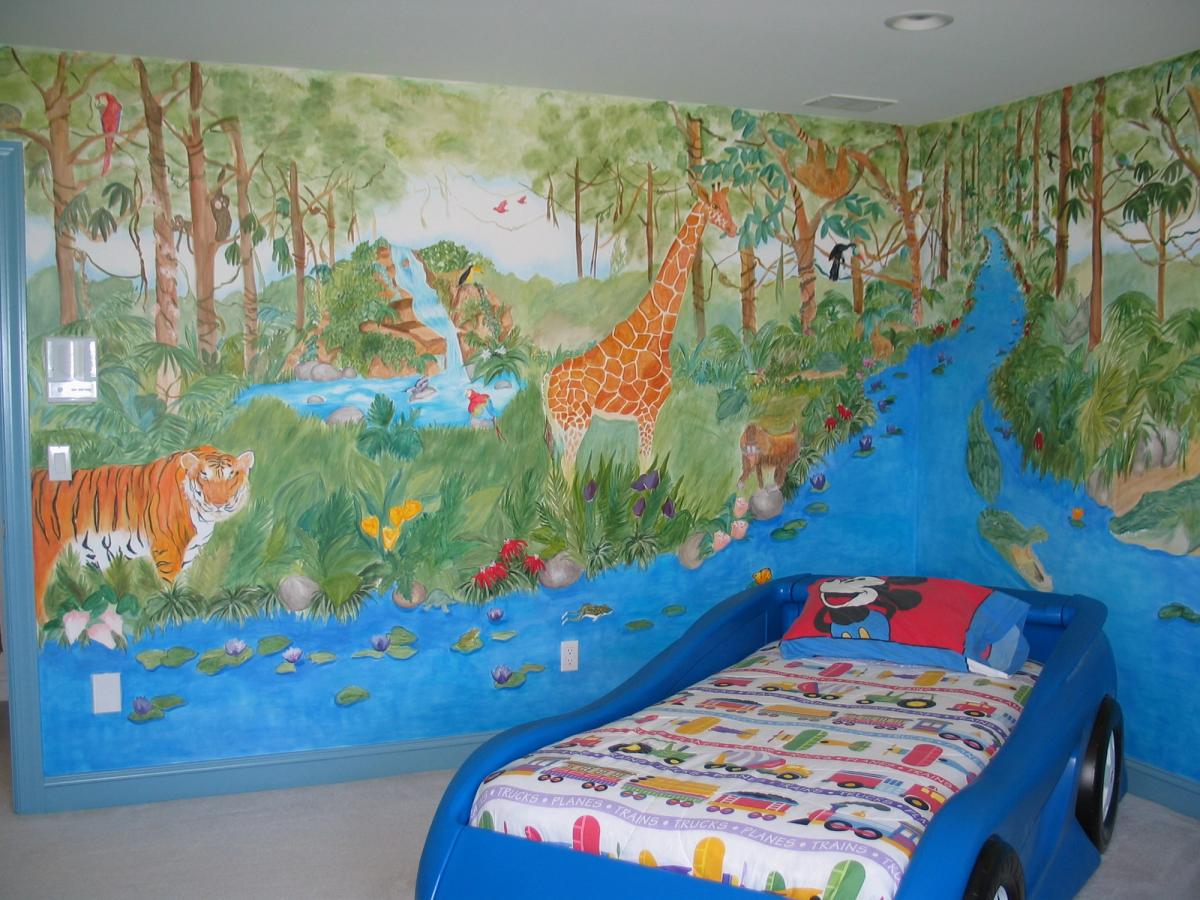
A child's room is the most frequently renovated room in the house — and the one most often renovated with regret: "we should have thought this through earlier." A mural ordered for a two-year-old can feel "too babyish" for a five-year-old, and a wall featuring a trendy cartoon hero ages faster than the cartoon itself.
After more than a decade of working on walls, I know one thing: a good children's mural is designed not for the child's age today, but for the next five to eight years of their life. Here's how that works in practice.
Ages 0–2: a world of contrasts, not pastels
Counterintuitively, a baby doesn't need pink clouds. For the first months of life, an infant sees mainly contrast and simple, bold shapes — a pastel meadow is, to them, simply invisible. I wrote about this in more detail in my article on how babies see the world.
What works on the wall:
- Large, simple shapes with strong outlines — animals, leaves, geometry
- High-contrast pairings in the zone the baby actually looks at (around the changing table and the crib)
- A calm base + one bold accent — parents have to survive hundreds of hours in this room too
The trap at this stage: designing the room "for the newborn photo shoot." The shoot lasts an hour; the mural stays for years.
Ages 3–5: storybook magic — but original
Preschoolers fall in love with characters. And here comes the temptation: "we'd like Elsa across the whole wall." I understand it perfectly — and still, I usually advise against it, for a prosaic reason: a fascination with one particular cartoon lasts a season or two. The wall stays. The hero who is a four-year-old's whole world today will get an "ugh, that's for babies" three years from now — and you're back to renovating.
Instead, I suggest motifs that feed the same imagination but have no expiry date:
- Safari and jungle — animals have worked on children reliably for generations
- A forest with its "residents" — foxes, owls, fawns; it grows up with the child
- An illustrated world map — storybook-like at age 4, educational at age 9
- Balloons, kites, clouds — light "sky" motifs that never turn infantile
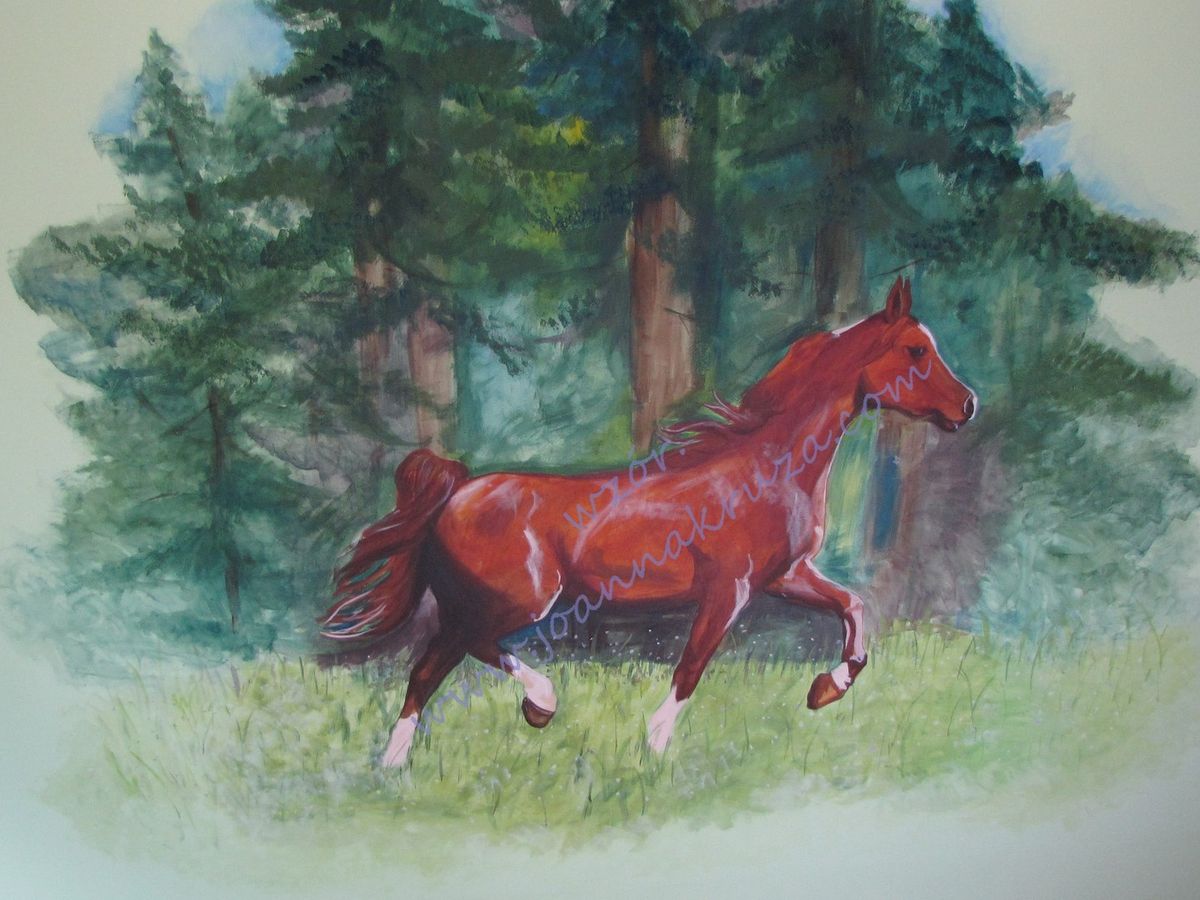
An original mural has one more advantage: these are your child's animals, the only ones of their kind in the world. No kid at preschool has the same ones.
Ages 6–10: passions, not decoration
A schoolkid has opinions — and they deserve respect. The best murals at this age happen when the child co-decides on the theme:
- Space — planets, rockets, nebulae; a classic that never leaves the podium
- Maps — the world, their country, an invented land; a wall that teaches on the side
- Sport, music, dinosaurs, the ocean — whatever the current passion is, rendered in a graphic style universal enough to survive a change of interests
- "Growing-up" motifs — artwork that will still look good at fourteen: geometry, landscape, subtle illustration instead of "cartoonishness"

A practical tip: at this age a mural works best on one wall — the one visible from the door or from behind the desk — rather than around the whole room. It leaves space for posters, shelves and everything the child will want to add themselves.
How to design a mural your child won't outgrow
Five rules I apply to every children's room project:
- A universal motif, not a licensed one — nature, space and maps instead of screen characters
- A palette that matures — a muted base with colourful accents; in five years you change the accessories, not the wall
- Composition with breathing room — a wall filled to the brim gets tiring; a mural should breathe with the room
- A child zone and a calm zone — a bold motif by the play area, a quieter one by the bed
- Room for change — I design so an element can be added later (a new animal, a sibling's name) without repainting the whole piece
Safety: what I paint with in children's rooms
In children's rooms I use exclusively water-based acrylic paints intended for interiors, with minimal VOC emissions. The room is usually ready for sleeping after 24–48 hours of airing once the work is finished. Where the wall will be touched (bed and desk zones), I protect the surface with a washable coating — crayon marks and handprints come off with a damp cloth, not with the paint.
What a children's mural costs
Children's and storybook motifs usually fall into group II of my price list: 250–400 PLN/m². A typical wall in a child's room (8–12 m²) means a budget of roughly 2,000–4,800 PLN, depending on detail. You'll find the full ranges and pricing factors in my mural pricing guide.
The work usually takes 2–4 days — and yes, your child is welcome to check in every day to see "whether the zebra has its stripes yet."
Where to start
Send me a photo of the wall, its dimensions and your child's age (plus their current fascinations — the best brief there is). I reply within 24 hours with a motif proposal and a quote.
Joanna Kruza — murals and decorative wall techniques. Academy of Fine Arts graduate. Working in Kraków and Warsaw.