Concrete Effect Walls: Paint, Plaster or Microcement?
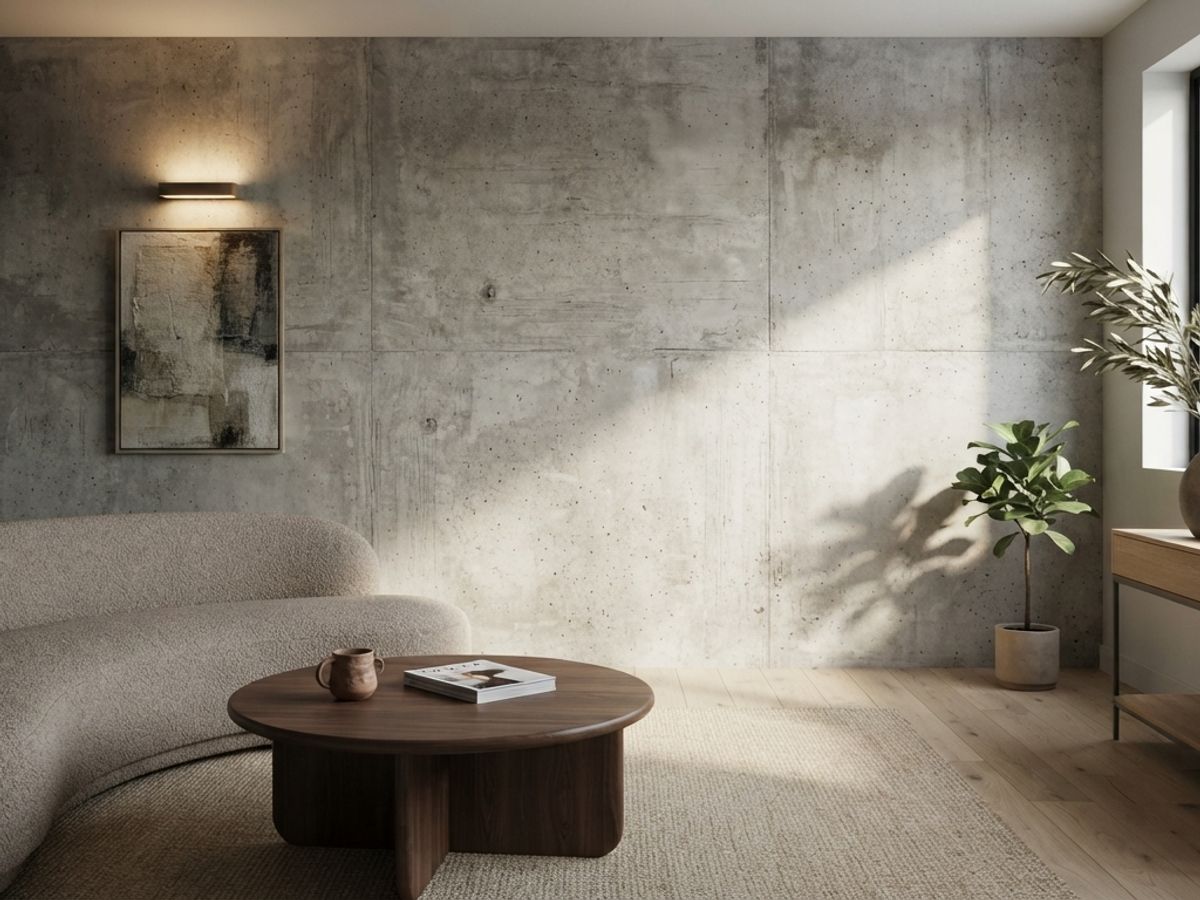
Concrete on a wall often gets specified as warm. It sounds like a contradiction and it's actually a very precise brief: the rawness of the surface without the hospital-blue grey most people picture when they think concrete.
There are at least three routes to that effect and they differ far more than Pinterest photos suggest. Different technology, different lifespan, different bill. It's worth knowing what you're actually ordering.
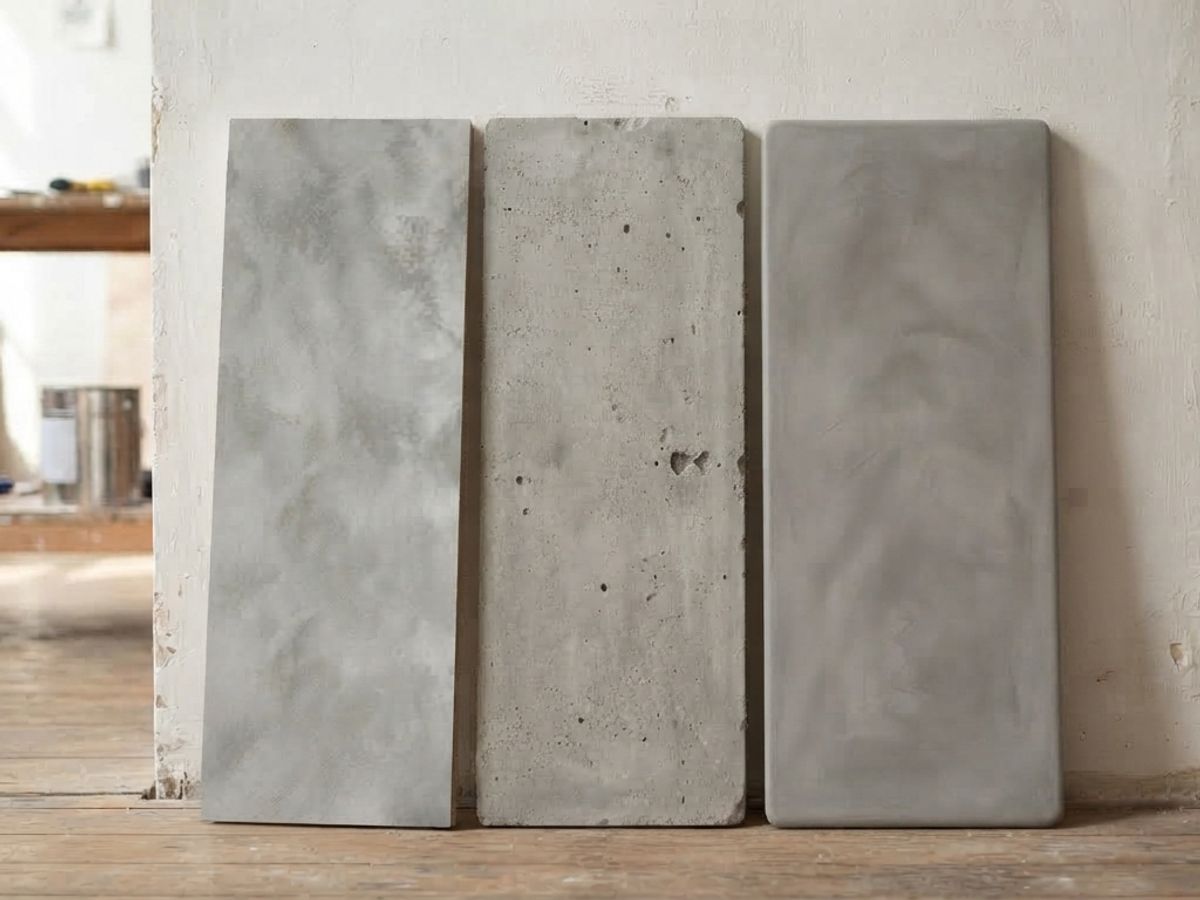
Textured paint, or the imitation
The cheapest way in. You buy a ready-made product at a builders' merchant, apply it with a roller or a plastic float, and after two passes you have a wall that reads as concrete from across the room. From half a metre away it stops.
The trouble is that texture in structured paint is shallow. The filler gives you roughness but not depth, so raking light has nothing to catch on. The wall reads as painted rather than made of something.
It has its uses and I'm not going to sneer at it. A rented flat, a teenager's room, a wall you'll want to change in two years — paint is a sensible call there. You do it yourself over a weekend and pay nobody for labour.
Decorative plaster, or real texture
Here we move to a mineral material applied with a steel trowel, layer over layer. A concrete effect takes three or four passes, each with its own job: the first levels, the next build irregularity, the last pulls off the excess and reveals what sits underneath.
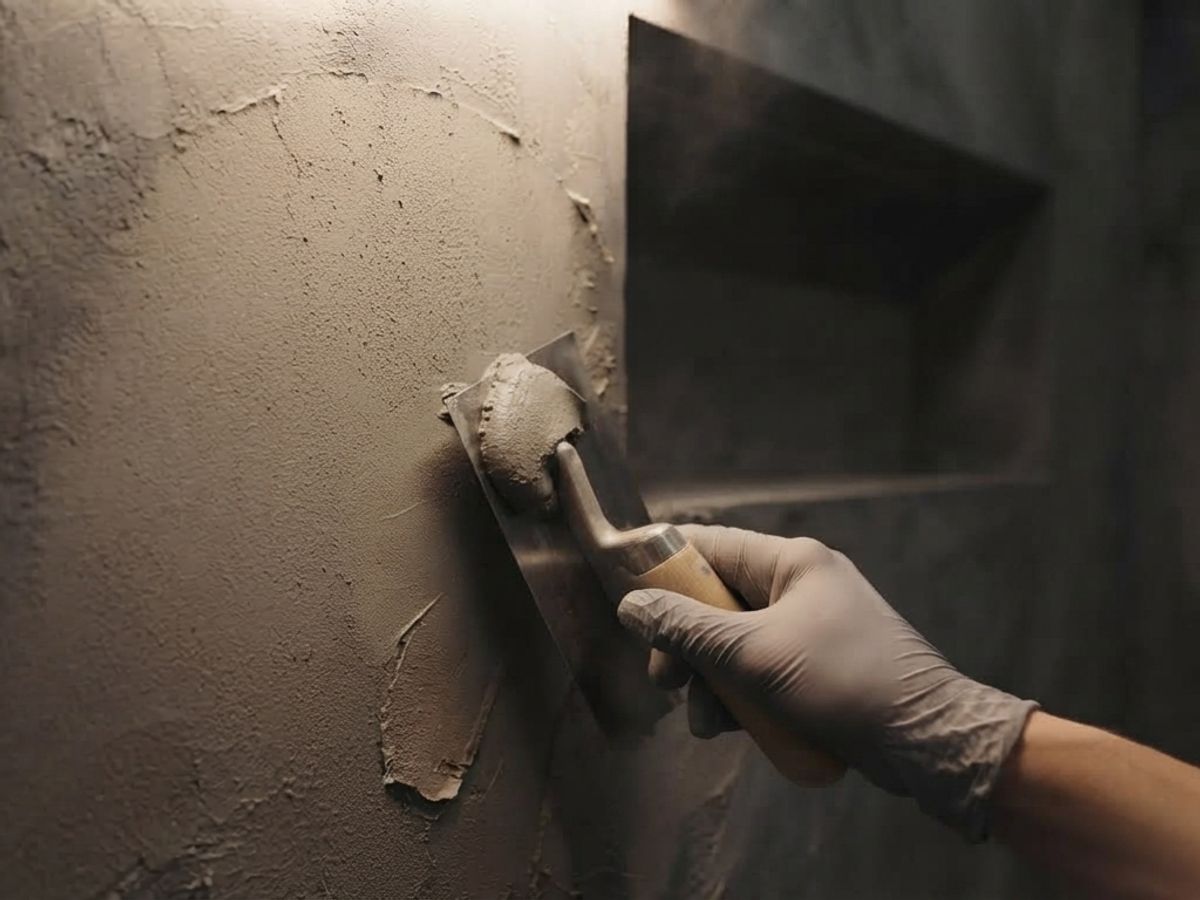
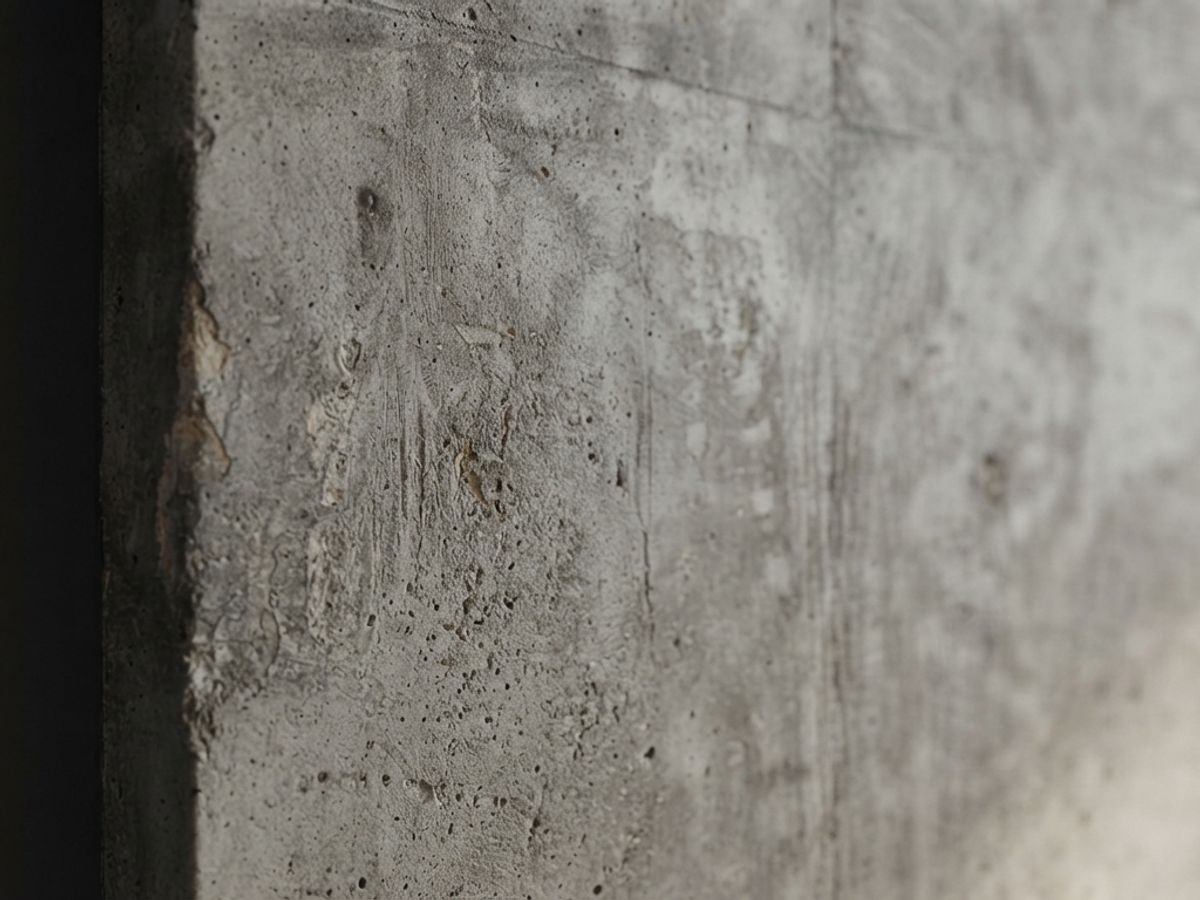
The result is a surface with genuine depth you can feel with your fingers. In side light you see the drags, the streaks and the small craters that in real concrete come from air trapped in the mix. The wall changes through the day as the sun moves, and that's precisely what you're paying for.
Colour comes from pigment mixed into the material, so the shade sits inside it rather than on top. You can move away from grey towards sand, cream or something very dark, close to graphite. That warm version is usually a grey knocked back with ochre.
Concrete-effect plaster gets confused with Venetian plaster and they are two different things. Venetian is burnished to a shine and builds depth through translucent layers, which I covered in my piece on Venetian plaster. Concrete goes the opposite way, towards matte and raw.
Microcement, or the technical coating
The strongest option and the priciest. Microcement is a system of several products: a bonding primer, two coats of cement-polymer compound, sanding, then two or three polyurethane sealers. Together they form a coating under three millimetres thick that is hard and waterproof.
That hardness opens up applications plaster can't handle. Microcement goes on floors, on kitchen worktops, around a bath and onto shower walls. All in one shade, without a single grout line, which in a small bathroom makes an enormous difference both visually and practically.
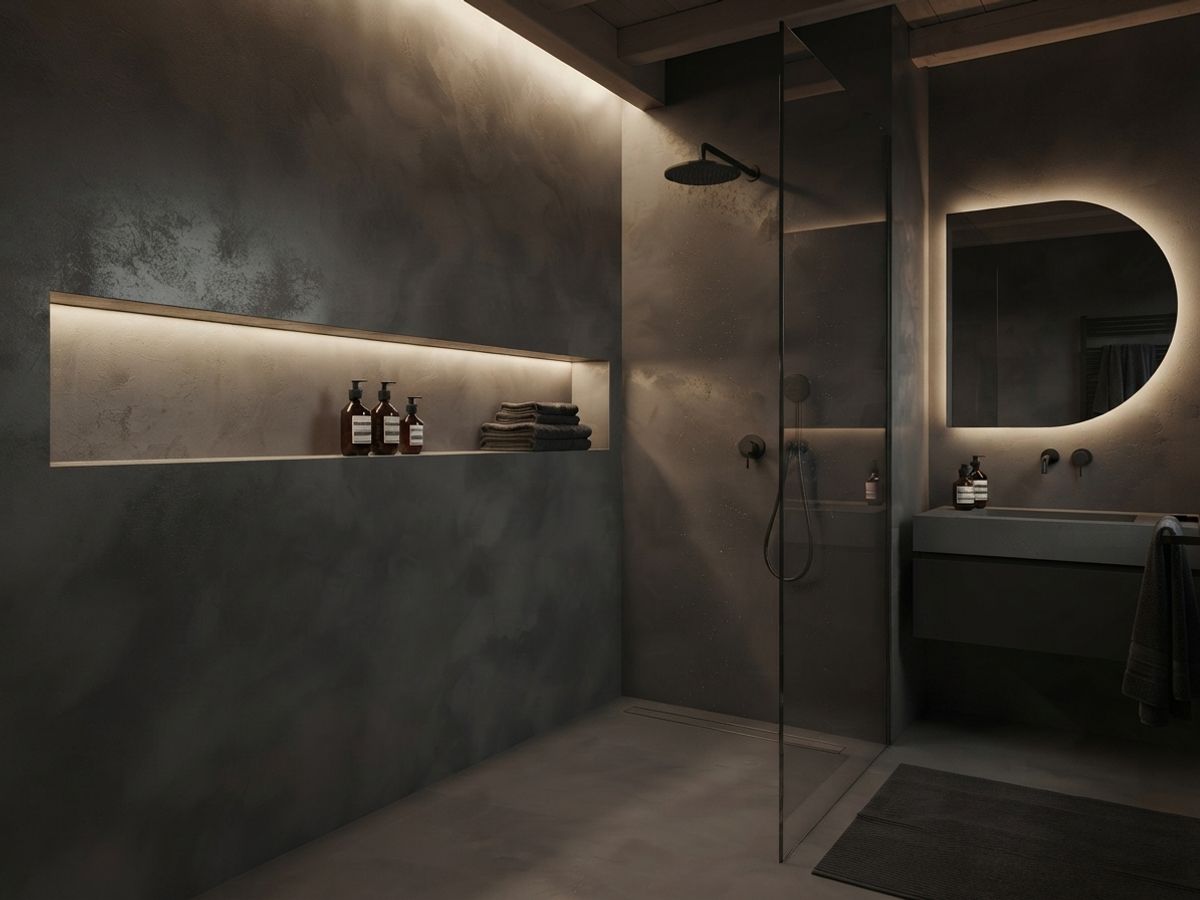
The cost is time and demands on the substrate. The job spreads over several days because you have to wait between coats, and the sealer needs a few more days to fully cure before the surface will take normal use.
The substrate decides everything
None of these techniques will hide a wall in poor condition. If anything, plaster and microcement expose waviness mercilessly, because a matte textured surface catches every curve in raking light. Paint forgives a little more, but not much.
The sequence never changes: check the adhesion of the existing coating, fill defects, level with skim, sand, remove dust, prime. I set it all out step by step in my piece on preparing a wall for decorative plaster. If someone quotes you for microcement without looking at the wall first, that's a bad sign.
What it costs
Prices are per square metre of wall, gross, materials and labour included. Substrate preparation is quoted separately depending on the condition of the wall. Watch for this when comparing offers, since some contractors quote net figures and at rates around three hundred złoty the difference gets serious.
Textured paint applied yourself comes to 60–90 zł, mostly the cost of materials. Plaster in a plain, uniform concrete effect: 170–250 zł. The same plaster worked by hand, with built-up drags and irregular texture: 250–330 zł. Microcement on a wall including sealing: 300–450 zł, rising to 600 zł in a bathroom with a lot of corners and detail.
The gap between the first and last figure comes down mostly to the number of coats and the time involved. With microcement you're not paying for material but for six days of work on a single wall. My quoting principles are the same as for murals, set out in my pricing guide.
What to choose for what
Living room, bedroom, hallway, anywhere the wall only has to look good: decorative plaster. Best ratio of effect to cost and full freedom in the shade.
Bathroom, kitchen units, floors, anywhere the surface will get wet or handled: microcement. There's no sensible alternative with that look.
A rental flat or a wall you're testing an idea on: textured paint, done yourself, guilt-free.
If the naming confuses you, and it should, since contractors use a dozen terms for the same thing, I have a separate piece sorting out the vocabulary: a glossary of decorative techniques. It helps when comparing quotes, because two companies can sell two entirely different technologies under one label.
As for warm concrete: in plaster, grey knocked back with ochre, you get exactly what people are after. The contradiction was only apparent.
Joanna Kruza — murals and decorative wall techniques. Fine Arts Academy graduate. Working in Kraków and Warsaw.