Marbling, stucco, tadelakt, microcement — a glossary of decorative wall techniques with prices
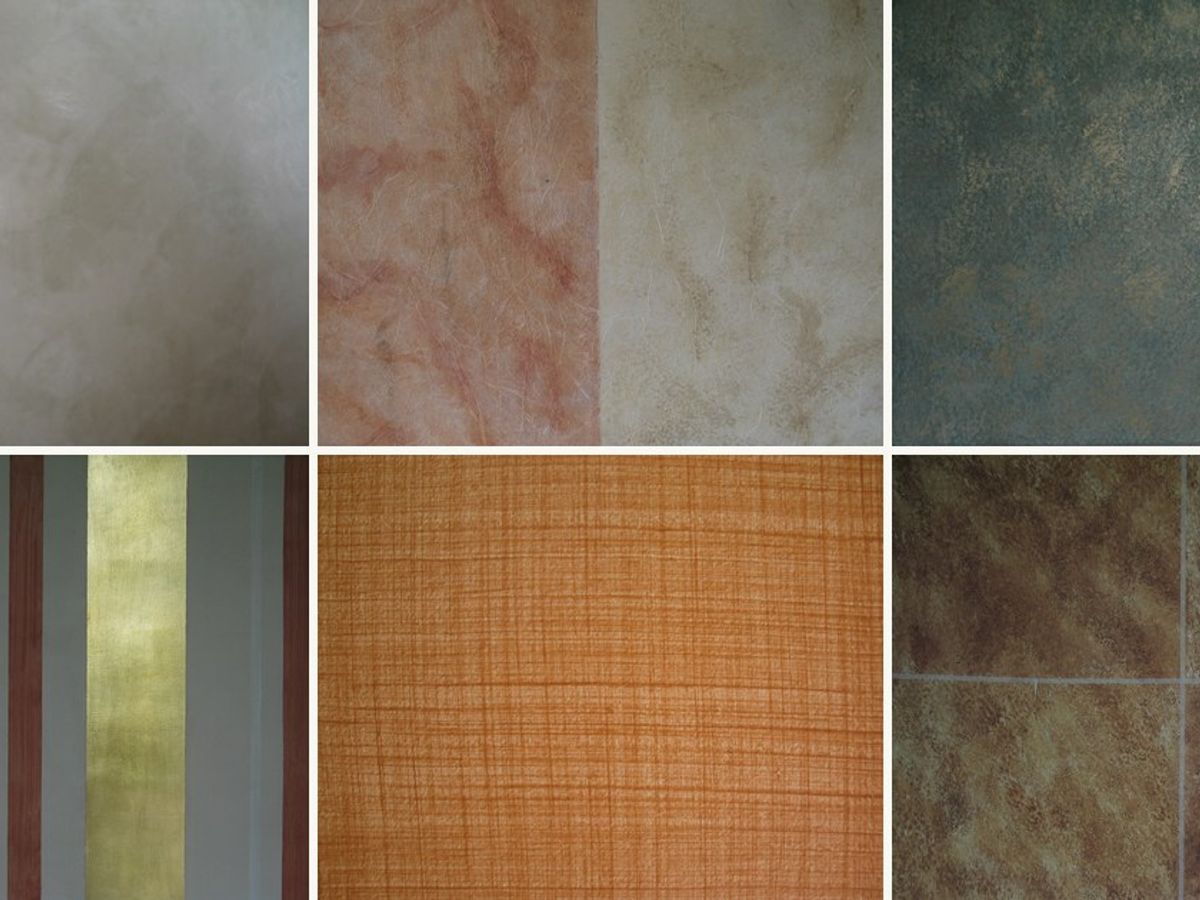
A client comes to me with her phone: "I want something like this." She opens Pinterest and shows me a photo. The wall looks like veined marble. I ask: "should that be marbling or Venetian stucco?" Silence. "Aren't they the same thing?"
They're not. The visual effect can be similar, but the technique, price, durability, and process are completely different. This glossary will help you name what you're looking for — and talk to a contractor in a language that avoids misunderstandings.
Looking for inspiration rather than definitions? See my article 6 techniques that turn an ordinary wall into a work of art.
1. Venetian stucco (stucco veneziano)
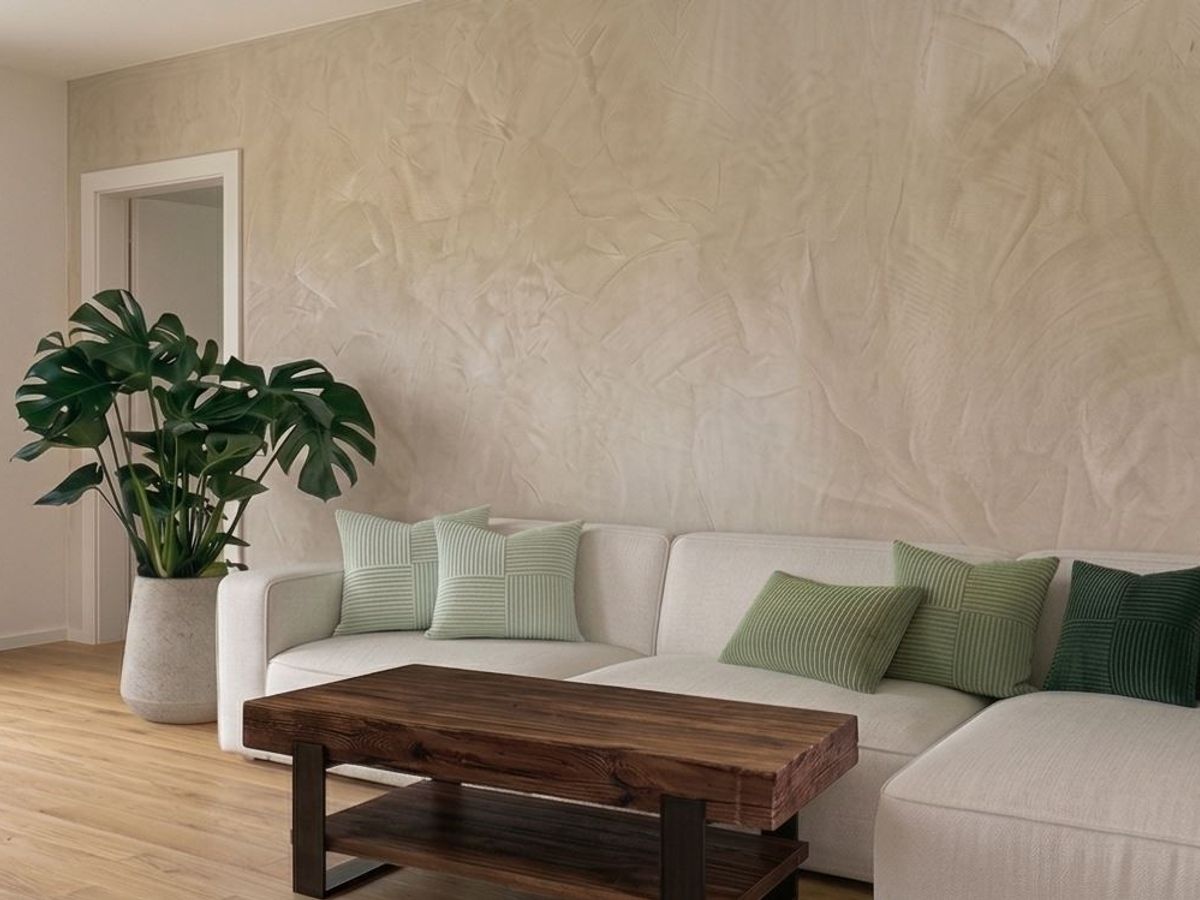
What it is: A multi-layer decorative plaster based on slaked lime and marble dust, polished with a Venetian trowel to achieve the effect of polished marble.
Effect: Depth, a satin or mirror-like sheen, irregular veining, the illusion of stone.
Durability: 20–50 years.
Price: 250–600 PLN/m² (materials + labour).
Where it works best: living rooms, dining rooms, hallways, statement bathrooms.
Note: This is genuine stucco, not a "stucco-effect plaster." If the price is below 150 PLN/m², it's most likely an acrylic imitation.
→ Read the full article: Venetian stucco — what it is, what it costs, and whether it suits your interior
2. Marbling (faux marble)
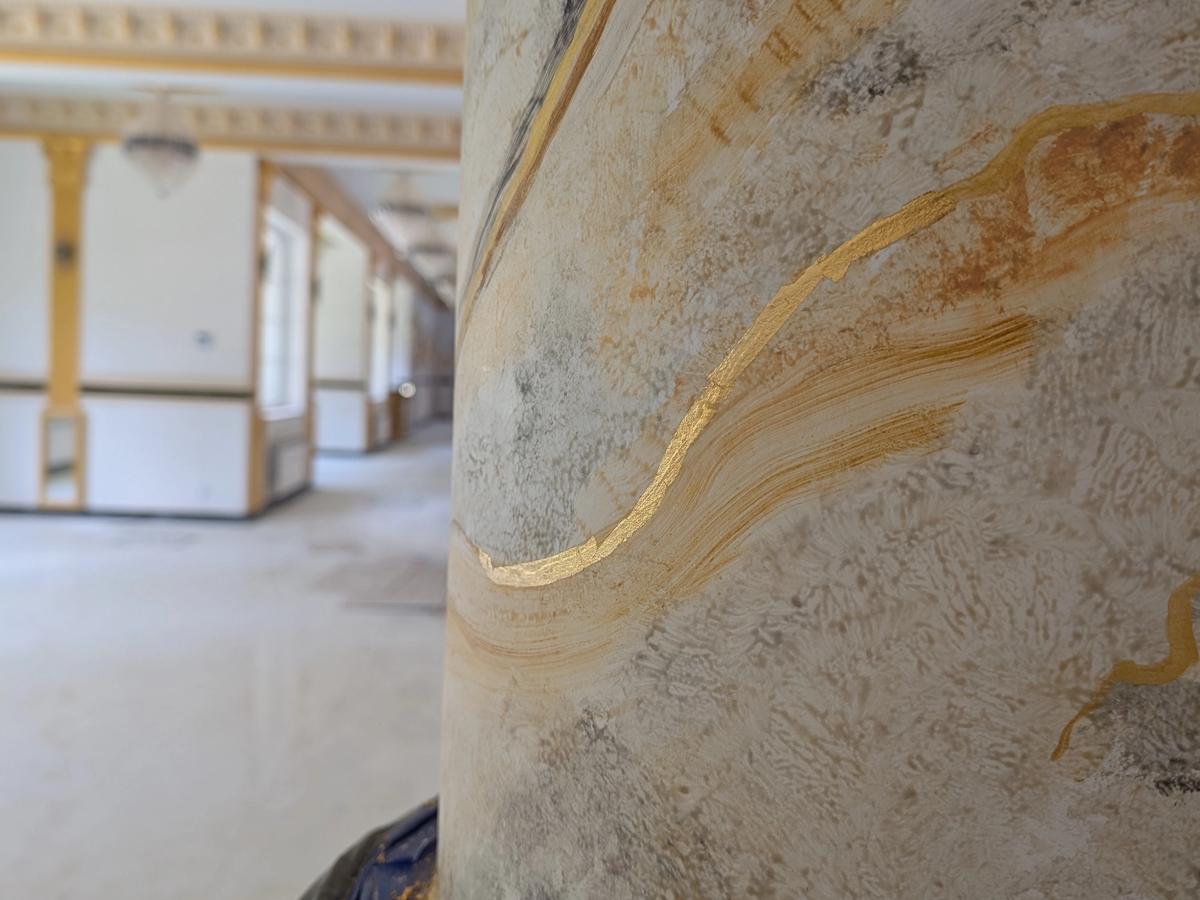
What it is: Hand-painting with paints to imitate marble, granite, or another stone. No plaster mass is used — just paints and brushes.
Effect: A realistic imitation of stone, often deceptively close to the original.
Durability: 10–20 years (depending on the protective varnish).
Price: 400–800 PLN/m².
Where it works best: fireplaces, tables, countertops, columns, architectural elements you want to ennoble.
How it differs from stucco: stucco is a plaster (mass + polishing), marbling is painting (paints + brush). Marbling leaves a flat surface; stucco has a subtle texture.
3. Tadelakt
What it is: The Moroccan variety of lime stucco, polished with a stone and saturated with natural soap (sabun beldi). A tradition going back thousands of years.
Effect: A smooth, matte or gently sheened surface, waterproof, often in rich natural colours.
Durability: 30+ years.
Price: 400–700 PLN/m².
Where it works best: bathrooms (fully waterproof, even in the shower), hammams, pool surroundings, kitchens.
What makes it unique: the only decorative technique that performs directly under water.

4. Travertine effect
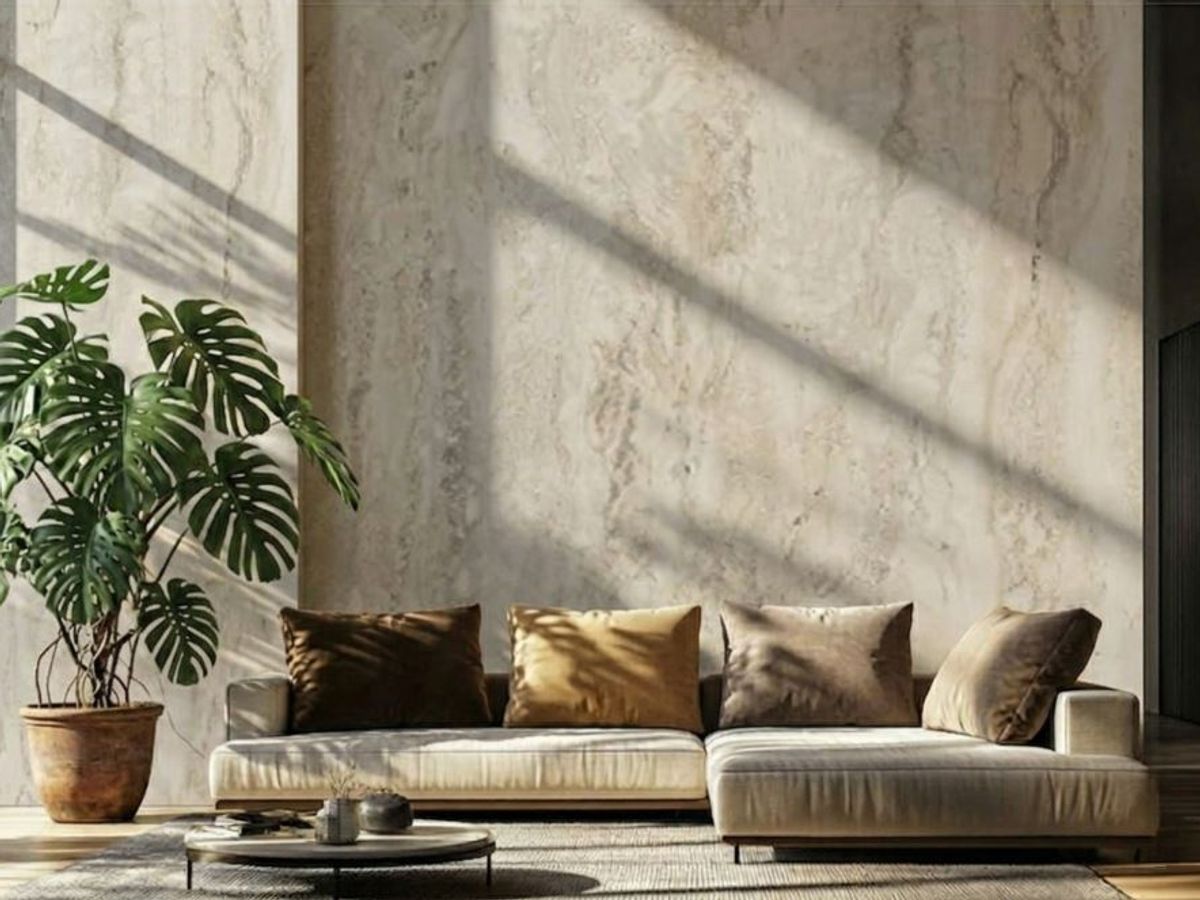
What it is: A technique imitating natural travertine stone — with its characteristic pits and layered structure. Executed with special plasters or paint combinations.
Effect: A matte, natural, slightly porous surface. Warm beiges, greys, creams.
Durability: 15–25 years.
Price: 250–500 PLN/m².
Where it works best: Mediterranean, Japandi, wabi-sabi, and Scandinavian-style interiors.
Trend 2025–2026: currently one of the most popular effects — often chosen instead of artificial stone.
5. Microcement
What it is: A cement-polymer compound applied in thin layers. It gives a concrete effect but is far more flexible.
Effect: A uniform, matte surface in tones of grey, cream, and warm shades. It can be applied to walls, floors, and countertops (one of very few techniques that can).
Durability: 20+ years.
Price: 300–500 PLN/m².
Where it works best: loft, industrial, and modern interiors. Bathrooms, kitchens, living rooms.
Advantage: the entire interior (floor + wall + countertop) can be finished with the same technique — visual coherence with no joints.
6. Architectural / decorative concrete
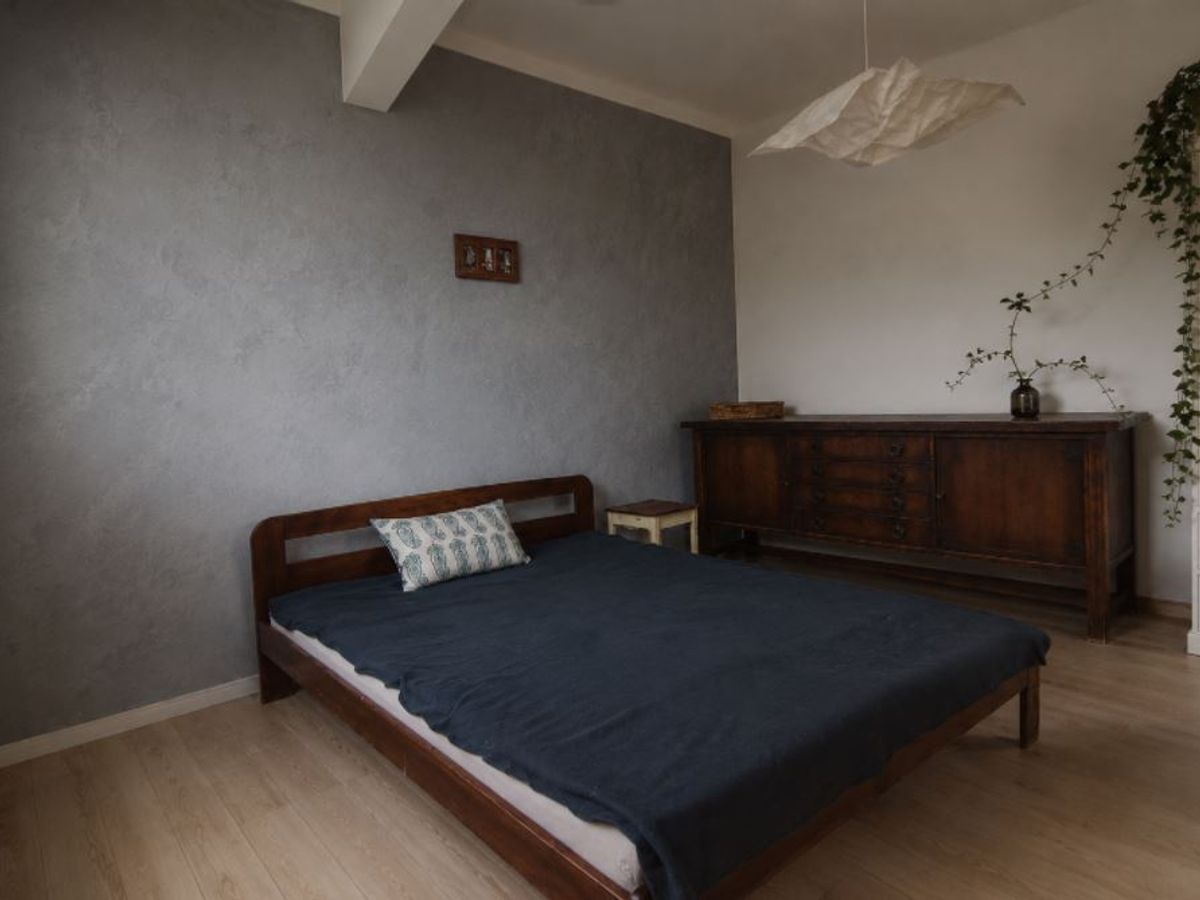
What it is: Panels or plasters imitating raw poured concrete. They can be real concrete (panels) or an effect (structural plasters).
Effect: Raw, industrial, cool — or warm, with the right tinting.
Durability: 25+ years.
Price: 350–600 PLN/m² (labour + materials).
Where it works best: lofts, offices, commercial spaces, modern apartments.
Note: real concrete (panels) vs a concrete effect (plaster) are two different things. Plaster is much lighter and cheaper and delivers 90% of the original impression.
7. Sponging
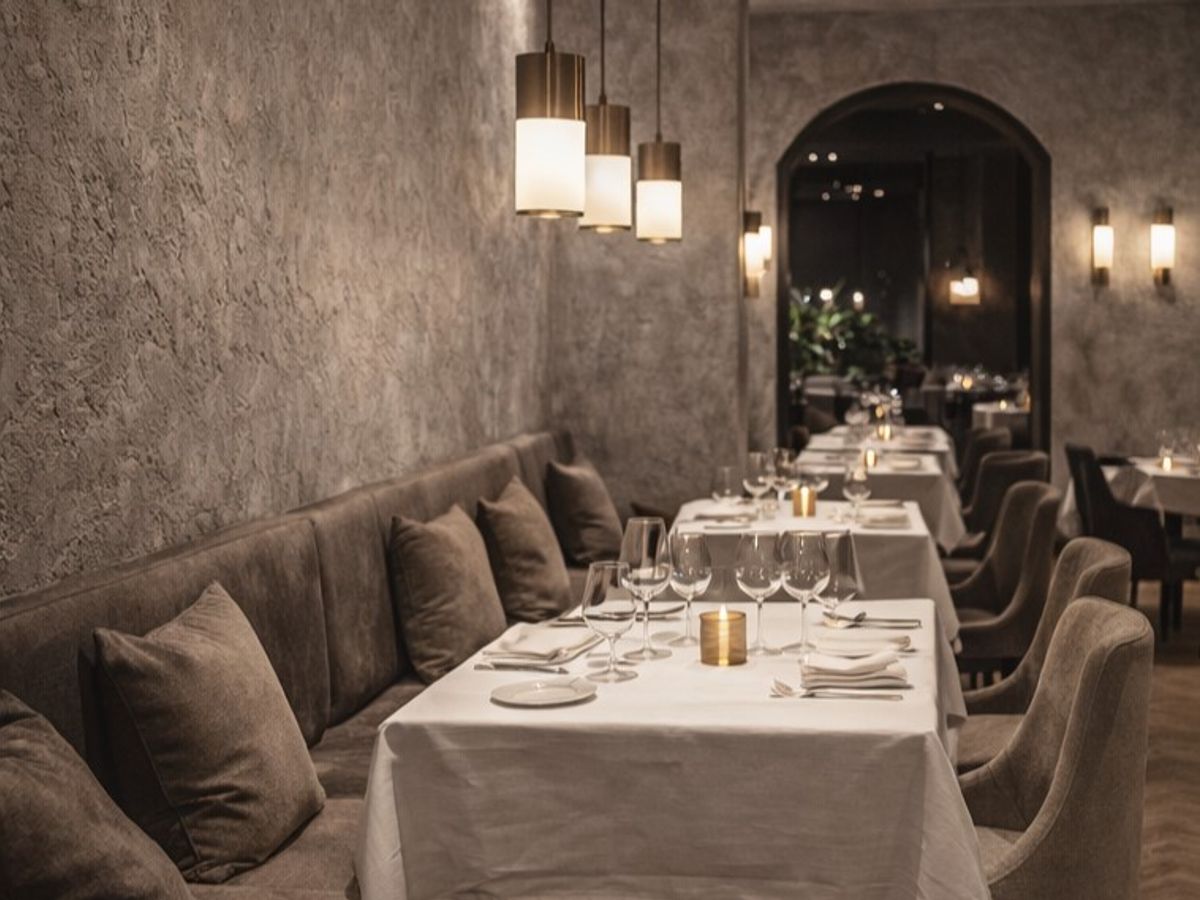
What it is: A texture applied to or lifted off the wall using a natural sea sponge.
Effect: An organic, delicate texture with multi-layered depth. Reminiscent of aged plaster or watercolour.
Durability: 7–10 years.
Price: 40–80 PLN/m² (one of the most affordable decorative techniques).
Where it works best: bedrooms, classic living rooms, backgrounds for murals, spaces that call for subtlety.
Advantage: excellent value for money — the best technique for anyone who wants to go beyond a plain wall without a stucco budget.
→ Read the full article: Sponging — a wall decoration technique
8. Ombre / gradient
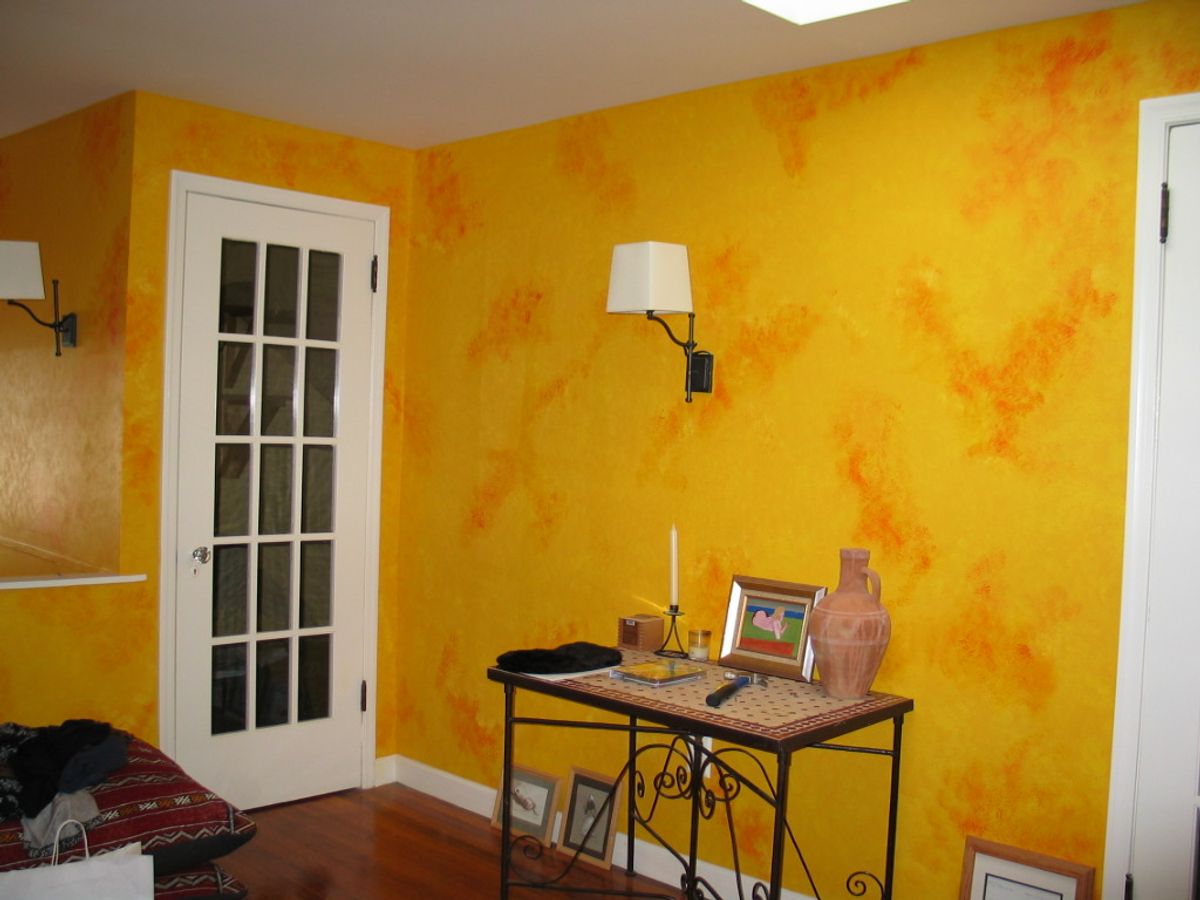
What it is: A fluid colour transition from one shade to another (most often from top to bottom).
Effect: A soft, diffused colour transformation. It can imitate a sunrise or sunset, the depth of water, or mist.
Durability: 8–12 years.
Price: 100–200 PLN/m².
Where it works best: bedrooms, children's rooms, meditative interiors.
Pro tip: it's excellent at masking wall imperfections (unlike stucco, which exposes them).
9. Glazing (colour wash)
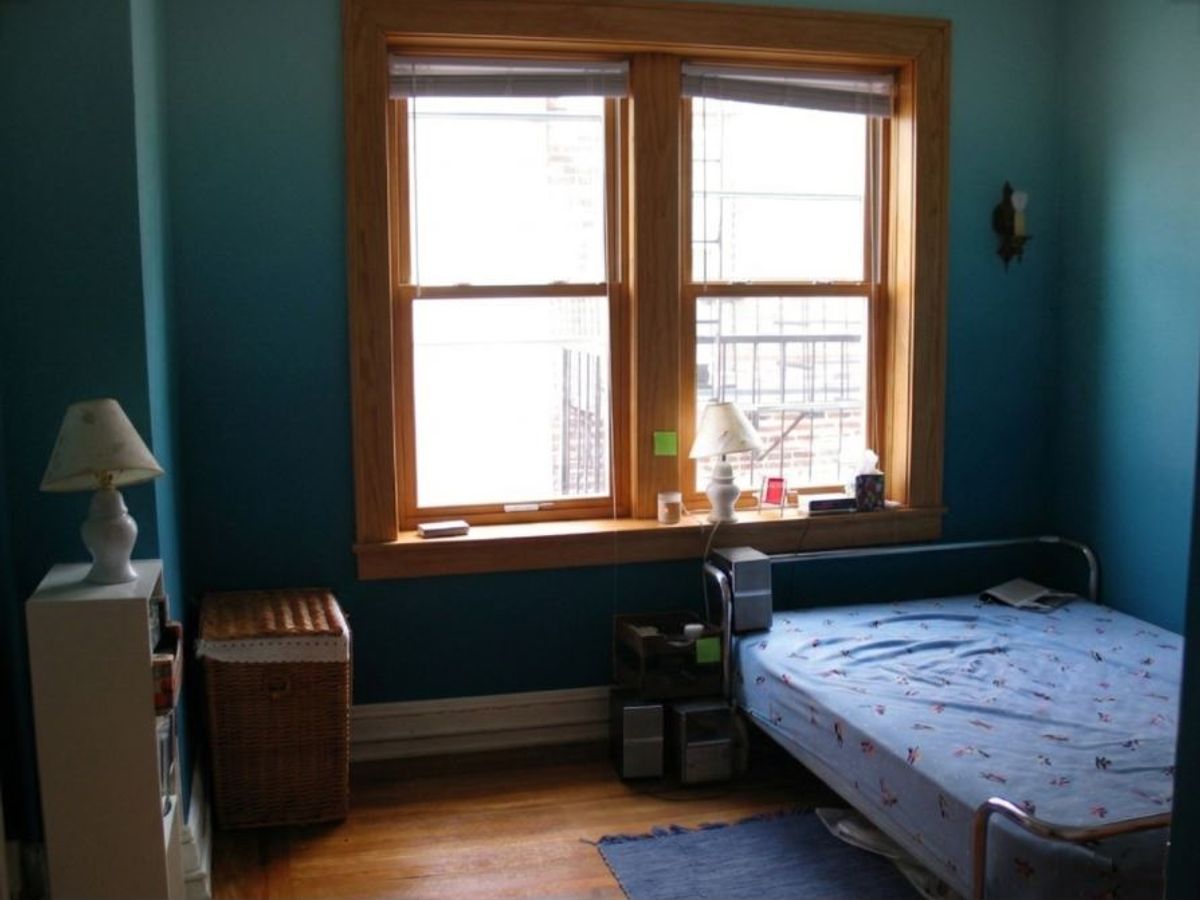
What it is: Semi-transparent painting with paint diluted in glaze — creating multi-layered colour effects of varying intensity.
Effect: A "breathing," living surface — never flat. Colour depth without using plaster.
Durability: 10–15 years.
Price: 120–250 PLN/m².
Where it works best: classic interiors, libraries, studies, rooms with plenty of wooden furniture.
Bonus: an excellent base for a mural (a mural painted over a glaze gains extra depth).
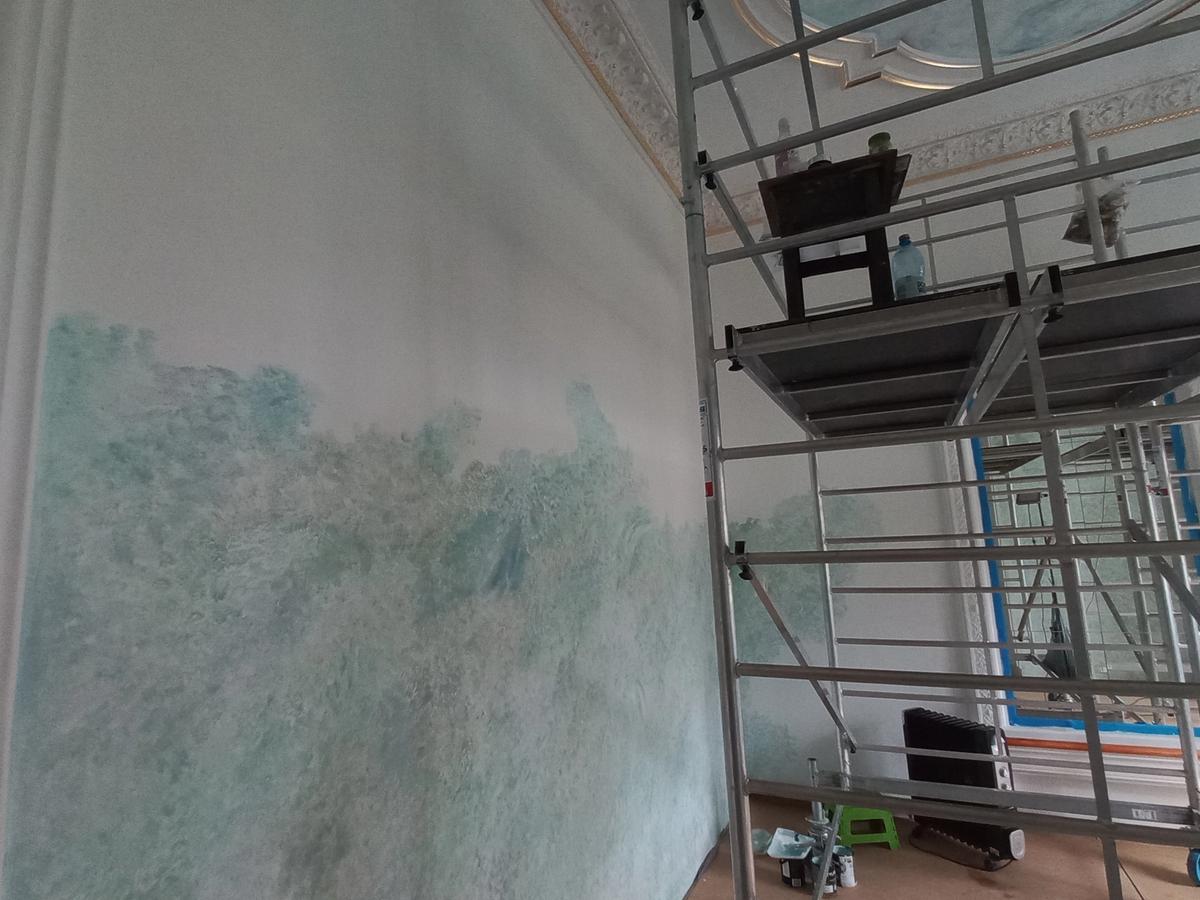
10. Trompe l'oeil (optical illusion)
What it is: Painting that creates the illusion of three dimensions — windows, doors, shelves, works of art, landscapes "outside the window" painted on a flat wall.
Effect: "Is that real?" — the instinctive first reaction.
Durability: 15–25 years (requires the highest quality paints and varnish).
Price: 600–2000+ PLN/m² (one of the most expensive techniques due to the precision required).
Where it works best: windowless spaces (basements, corridors), classic interiors, restaurants and cafés as a signature element.
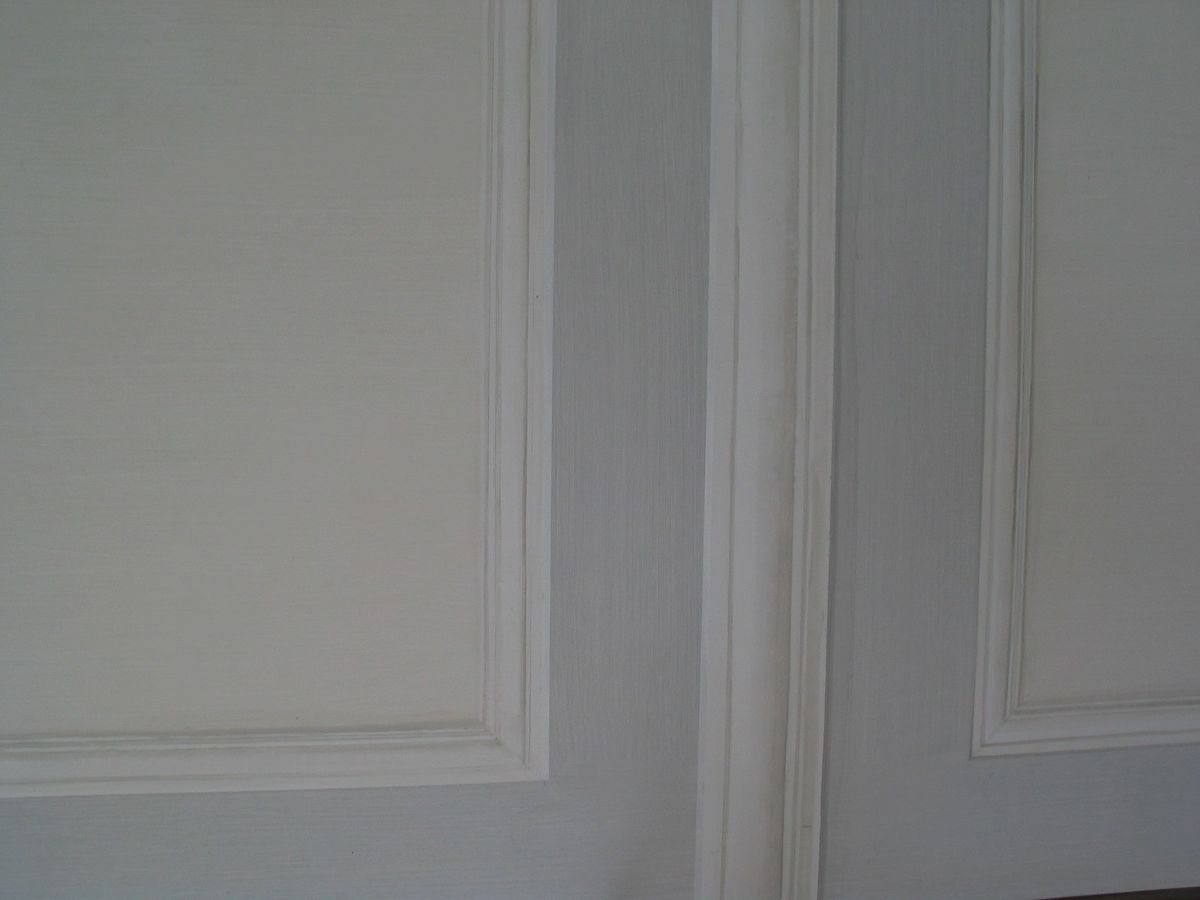
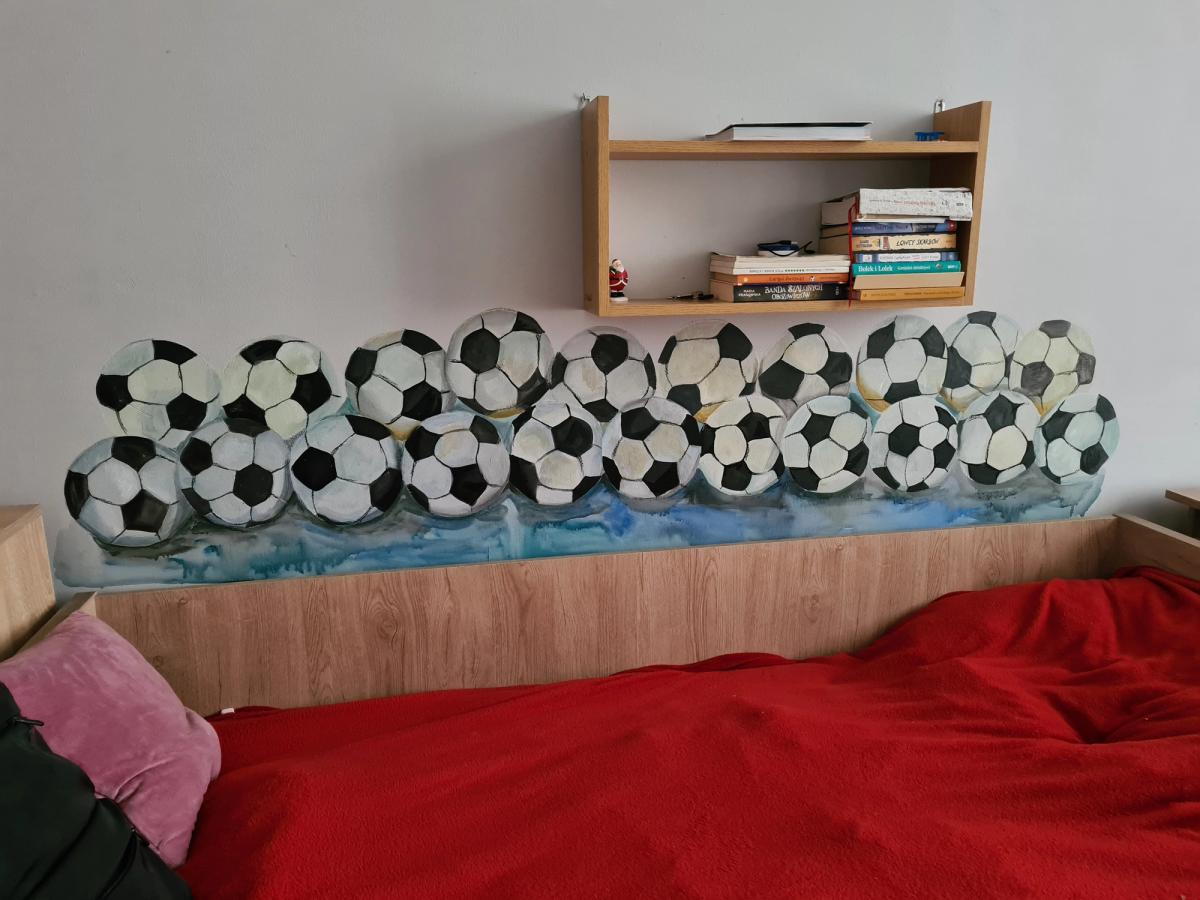
11. Mural
What it is: A hand-painted wall picture — any motif, any scale, any style.
Effect: A unique work of art tailored to the interior and the client.
Durability: 7–15 years (even longer with varnish).
Price: 150–2000 PLN/m².
Where it works best: anywhere you want something one of a kind.
→ See also: How much does a wall mural cost? Price guide 2026
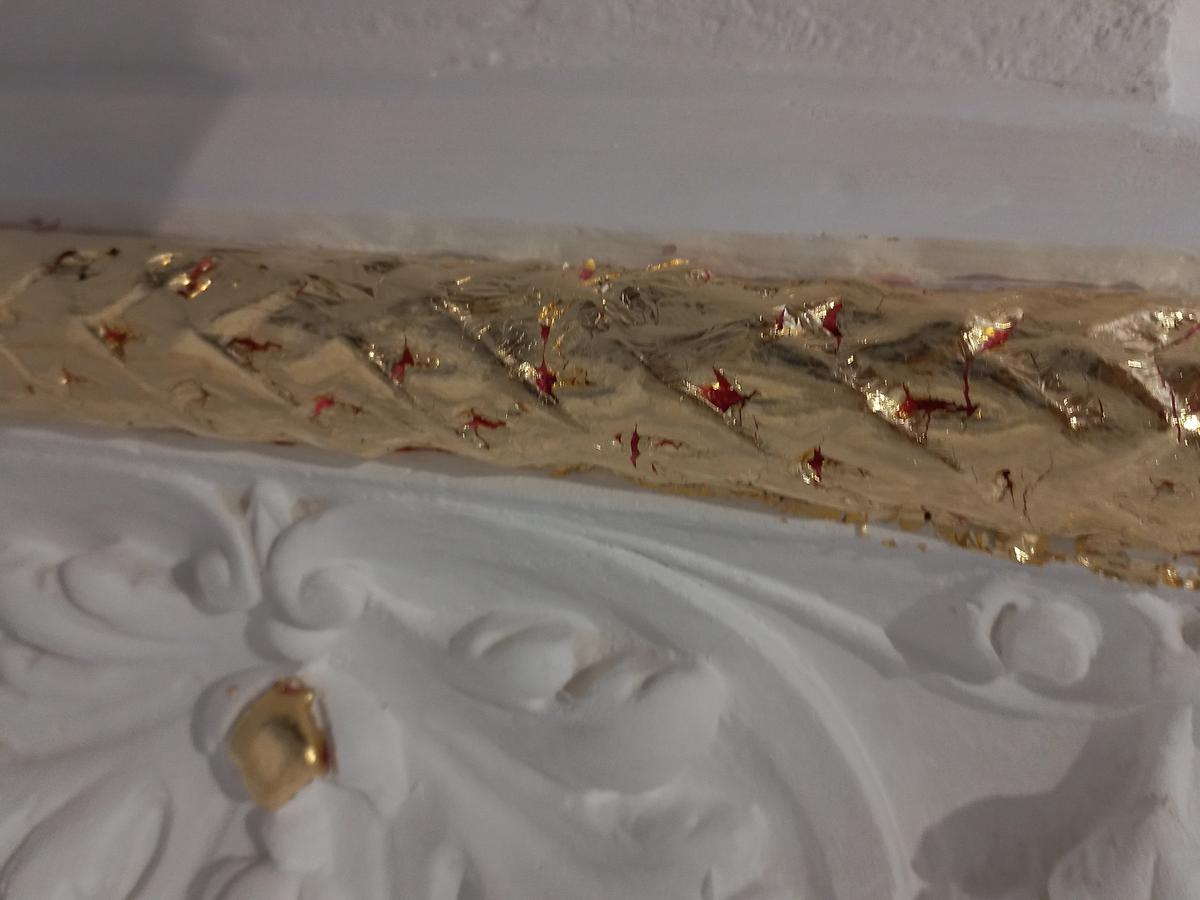
12. Stucco mouldings (gypsum / polyurethane)
What it is: Raised decorative elements (rosettes, cornices, pilasters) made of gypsum or polyurethane — mounted on walls and ceilings.
Effect: Classic elegance, architectural detail. Often painted or gilded.
Durability: 30+ years.
Price: highly variable (from 50 PLN per running metre of moulding to several thousand for a decorative detail).
Where it works best: classic, glamour, and palatial interiors — but increasingly also modern apartments as "one strong accent."
Note: Mouldings are raised ornaments, not a painting technique — they're often combined with marbling, gilding, or patina.
Which technique should you choose?
A quick decision guide:
- You want a marble effect across a whole wall, with a sheen → Venetian stucco
- You want a marble effect on a single element (fireplace, countertop) → marbling
- A bathroom with a refined, waterproof finish → tadelakt
- A loft, industrial vibe → microcement or architectural concrete
- A warm, Mediterranean-style interior → travertine effect
- A limited budget, but you still want decoration → sponging or glazing
- An unconventional element that surprises guests → trompe l'oeil
- Something unique and bespoke → mural
📩 Not sure what suits your space? Free consultation — we analyse the space, style, and budget and choose the optimal technique. joannakruza.com
Joanna Kruza — murals and decorative wall techniques. Kraków and Warsaw.